Monday, 8 August 2016

The North Water by Ian McGuire

 
SO far this has been my favourite longlisted book. It tells the story of a doomed whaling voyage in the 1850s. The Volunteer sets sail from Hull with the motliest of crews, made up of brutes and savages and skippered by the dubious Captain Brownlee. In the first few pages we meet Henry Drax, a vicious harpooner with a thirst for murder. He casually slaughters a drinking partner and rapes a young boy in the harbour before even setting foot on the ship.
I thought the character Drax was one of nastiest characters I had read about for a long time.
The writing is violent and unflinching from the beginning with insurance fraud, sodomy, abuse, survival in a desolate environment and some pretty gruesome scenes within the pages. McGuire doesn't shy away from writing about the gory details of life, whether that’s putrid smells, bodily fluids, animal slaughter, or human cruelty.
The sharp dialogue and stylish prose help to create an unnerving atmosphere of peril and suspense on the high seas. However the violence eventually loses its power to shock because of its frequency.
The ending felt a bit abrupt

Friday, 5 August 2016

Hystopia by David Means


This story is a unique and strange alternate history story -  JFK is in his third term, federal agencies have been created for the sole purpose of drugging vets, and deranged psychopaths running around violently murdering people. One of the main charcters, Rake is one of the creepiest nastiest characters I have come across 
 The book requires careful reading as there are lots of small details - fsuccessfully-enfolded vets are meant to be sent back into action, implying that this government administration has no real interest in ending the war at all.

 However, I just didn't enjoy this book - I found it too weird.
I also found the 3 main story lines confusing : the storyline featuring Rake, the storyline with the Corps agents, and finally Eugene’s story. While they were all tied up at the end of the book, I didn’t feel it was enough pay off for the struggle early on in the book.

Tuesday, 2 August 2016

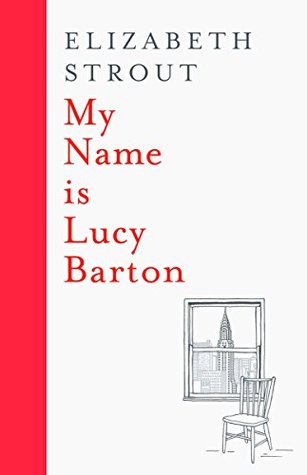
My Name Is Lucy Barton by Elizabeth Strout

  My Name is Lucy Barton
Lucy Barton is in the hospital for nine weeks following an appendectomy with complications. The novel is set during the five days her mother comes to stay by her bedside. It is written in the first-person narrative, which means the reader gets to see inside Lucy’s head: about her growing up in poverty, being abused, rising above it all, plus her constant worry about whether her mother loves her. 
 I loved the way the characters are so realistic. The book makes you think about big things. Like how we never escape from our past or the pain that was planted in us when we were growing up.
 Nothing much happens in this book; it’s all introspective and psychological, recollection and insight - one has to read between the lines. It's what isn't said that twists you all up inside, it’s the undercurrent that gets you. There’s melancholy and there’s longing, and there’s tenderness, regret, and acceptance.

Monday, 1 August 2016

The Many by Wyl Menmuir


 I really enjoyed this odd book although I am left with a sense I didn't get it! It offers a dystopian low-tech vision of a West Country fishing village where the waters are poisoned, rare catches are confined to strange mutated fish and jellies, and a cordon of empty container ships marks off a no-go zone offshore.  I found The Many more enjoyable and resonant than Howard Jacobson's J (2014).  it's significantly shorter, and the writing more atmospheric, powerfully written and haunting. 
I liked the relationship of the various time-periods as it not always what you assumed. 
The book is a metaphor about grief but it left a lot of unanswered questions.

Sunday, 31 July 2016

His Bloody Project: Documents relating to the case of Roderick Macrae by Graeme Macrae Burnet


I really enjoyed this gripping account of notorious Victorian murders pieced together by the accused's descendant.
It had very strong characters, a great narrative, plus an intriguing why-done-it - which still having finished it makes me think! 
I liked how each section of the novel is presented as a nonfictional document (i.e., memoir, testimony, a report on trial proceedings, etc.) - this makes it seem
convincing. The place it is set in is definitely real. James Bruce Thomson, one of the characters, is real. The writing is convincingly real. I'm pretty sure it is a fabrication, but the writing is good enough to leave a lingering doubt!
I enjoyed the element of unreliability that the reader must always bear in mind while developing his or her ideas and conclusions about the narrative and the characters.

Saturday, 30 July 2016

The Murder on the Links (Hercule Poirot Series Book 2) by Agatha Christie


A delightful period mystery. Lots of red herrings. All the clues right there before the reader. Twists and double-twists and even, can it be, a third twist right at the end.
However, I didn't enjoy it as much as others I read by her - but this is only the third book she wrote so she may have still be finding her style! 


Wednesday, 27 July 2016

The Third Man and The Fallen Idol by Graham Greene


This book contains 2 stories: The first is about a Brit who is invited to post-war Vienna by a friend, only to discover that said friend is dead and may have been involved in a rather nasty racket. The Third Man is unlike other Greene books. As Greene himself points out in the preface, 'it was never written to be read but only to be seen', meaning that while it's not exactly a film script, The Third Man was written to be turned into one, and it shows - the story is light on characterisation and heavy on descriptions of actions and situations.

The second, much shorter story in the book, 'The Fallen Idol', this is a tragedy about an innocent child who gets caught up in the nasty games adults play and ends up accidentally handing his best friend over to the police. It has great characters, some menace, several 'Oh, no!' moments and an abrupt but effective ending.

Both stories are beautifully written with not a word wasted, and both are very bleak in different ways